How Bags Are Manufactured: From Design to Delivery I BAKKA Bags
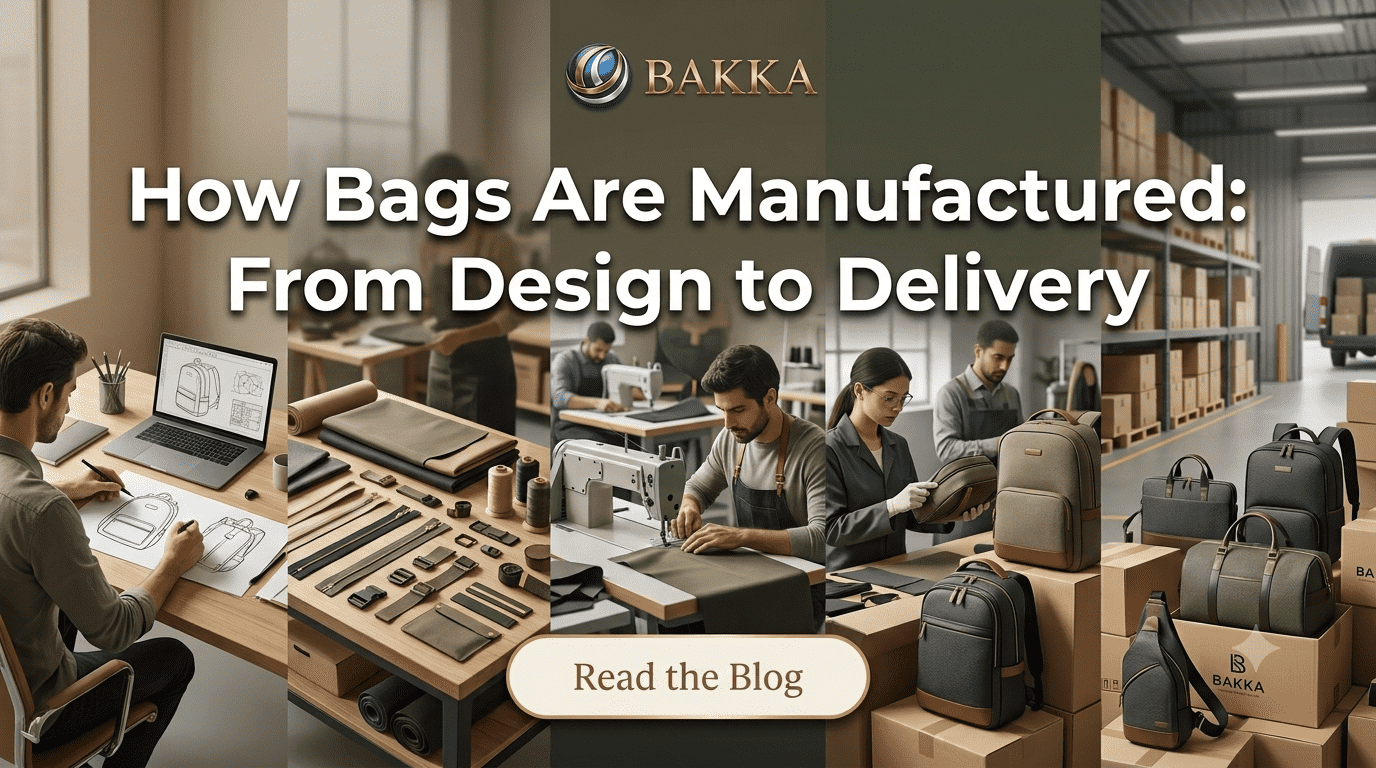
Behind every bag that reaches your hands lies a sophisticated manufacturing journey that blends artistry, engineering precision, and industrial scale production. At BAKKA Bags, we've perfected this intricate process over decades, transforming ideas into durable, functional, and beautiful products that serve millions of users worldwide. This comprehensive guide takes you inside the factory floor to reveal exactly how modern bags are manufactured—from the first sketch to final delivery. 🎯
Understanding this process isn't just academic—it empowers brands, retailers, and consumers to make informed decisions about quality, sustainability, and value. Whether you're sourcing bags for your business or simply curious about the craftsmanship behind everyday accessories, this journey will transform how you see every bag you encounter.
🎨 Phase 1: Design & Development - Where Innovation Meets Practicality
The Creative Genesis
Every bag begins with a problem to solve or a vision to realize. Our design process starts months before production, combining market research, trend analysis, and deep user understanding.
Market intelligence gathering:
-
Consumer behavior analysis: How do people actually use bags in different contexts?
-
Competitive landscape mapping: What gaps exist in current market offerings?
-
Trend forecasting: Colors, materials, and features that will resonate 6-18 months ahead
-
Functionality requirements: Weight capacity, weather resistance, security features, ergonomics
The design brief development:
-
Target user profiling: Demographics, lifestyle patterns, pain points, and preferences
-
Use case scenarios: Daily commute, travel, outdoor activities, professional settings
-
Brand alignment: How does this product reinforce brand values and market positioning?
-
Technical constraints: Manufacturing capabilities, cost targets, material limitations
From Concept to Blueprint
Sketching and ideation:
-
Rough concept sketches: Exploring proportions, functionality, and aesthetic directions
-
Technical drawings: Front, back, side, and interior views with precise measurements
-
User journey mapping: How customers will interact with each feature and compartment
-
Ergonomic considerations: Weight distribution, handle placement, strap positioning
Digital precision with CAD technology:
-
3D modeling software: Creates virtual prototypes for testing and visualization
-
Pattern generation: Translates 3D designs into 2D cutting patterns
-
Fit simulation: Virtual testing of how components interact and move
-
Material optimization: Minimizes waste through efficient pattern nesting
The Technical Specification (Tech Pack)
The tech pack serves as the manufacturing bible—a comprehensive document that eliminates ambiguity and ensures consistent quality:
Detailed specifications include:
-
Precise dimensions: Every measurement to the millimeter
-
Material specifications: Fabric weights, coating types, color codes
-
Hardware requirements: Zipper specifications, buckle types, rivet materials
-
Construction details: Stitch types, seam allowances, reinforcement locations
-
Quality standards: Acceptable tolerances and testing requirements
Visual documentation:
-
Technical flats: Line drawings showing construction details
-
Cross-sections: Internal structure and layer assembly
-
Hardware placement: Exact positioning of functional elements
-
Branding guidelines: Logo placement, sizing, and application methods
🧵 Phase 2: Material Selection & Sourcing - The Foundation of Quality
Strategic Material Procurement
Material selection directly impacts performance, durability, sustainability, and cost. Our procurement process balances multiple factors to achieve optimal outcomes.
Primary material categories:
|
Material Type |
Performance Focus |
Applications |
Quality Indicators |
|
High-denier fabrics |
Durability, abrasion resistance |
Outdoor gear, workwear bags |
600D+ polyester, ballistic nylon |
|
Technical fabrics |
Water resistance, lightweight |
Travel, sports equipment |
DWR coatings, ripstop construction |
|
Natural materials |
Sustainability, premium feel |
Fashion bags, eco-conscious brands |
Organic certification, fiber quality |
|
Recycled materials |
Environmental impact |
Corporate responsibility products |
Recycled content verification |
Hardware and component sourcing:
-
Zippers: YKK, SBS, or equivalent quality with appropriate cycle ratings
-
Buckles and clips: Duraflex, ITW Nexus for proven durability
-
Webbing and straps: Military-spec or commercial grade based on application
-
Foam and padding: Density specifications for comfort and protection
-
Thread: High-tenacity polyester or nylon core for strength
Quality Assurance at Source
Incoming inspection protocols:
-
Material testing: Tear strength, colorfastness, water resistance verification
-
Dimensional accuracy: Weight, thickness, and consistency measurements
-
Visual inspection: Defect identification and batch consistency evaluation
-
Certification validation: Ensuring compliance with environmental and safety standards
Supplier relationship management:
-
Partnership development: Long-term relationships with certified suppliers
-
Capability assessments: Regular audits of supplier facilities and processes
-
Innovation collaboration: Joint development of new materials and technologies
-
Risk mitigation: Multiple qualified sources for critical materials
✂️ Phase 3: Pattern Making & Cutting - Precision at Scale
Pattern Engineering Excellence
Converting 3D designs into 2D cutting patterns requires both technical expertise and creative problem-solving.
Pattern development process:
-
Size grading: Creating multiple sizes while maintaining proportional integrity
-
Seam allowance optimization: Balancing construction needs with material efficiency
-
Grain line consideration: Ensuring fabric stability and appearance consistency
-
Test fitting: Physical mock-ups to validate pattern accuracy
Advanced pattern technology:
-
CAD pattern making: Computer-aided design for precision and revision control
-
Virtual fitting: 3D simulation to test pattern accuracy before cutting
-
Automatic nesting: Software optimization for minimal material waste
-
Pattern digitization: Digital storage and sharing for consistent reproduction
Industrial Cutting Operations
Fabric preparation:
-
Relaxation process: Allowing fabrics to settle and reduce tension
-
Quality inspection: Identifying defects before cutting to minimize waste
-
Layer spreading: Precisely stacking multiple fabric layers for bulk cutting
-
Marker making: Arranging patterns for optimal material utilization
Cutting technology selection:
|
Method |
Best For |
Advantages |
Limitations |
|
Manual cutting |
Small batches, samples |
Flexibility, low setup cost |
Labor intensive, consistency variation |
|
Die cutting |
High volume, simple shapes |
Speed, consistency |
High setup cost, limited complexity |
|
CNC cutting |
Complex shapes, mixed materials |
Precision, versatility |
Higher investment, programming time |
|
Laser cutting |
Synthetic materials, sealed edges |
No fraying, intricate details |
Material limitations, fume extraction |
Cutting quality control:
-
Edge quality inspection: Clean cuts without fraying or distortion
-
Dimensional verification: Ensuring pieces match pattern specifications
-
Bundle organization: Proper sorting and identification for assembly
-
Waste tracking: Monitoring efficiency and identifying improvement opportunities
🎨 Phase 4: Printing & Branding - Identity Integration
Pre-Assembly Customization
Adding brand elements while components are flat ensures optimal quality and efficiency.
Digital printing applications:
-
Direct-to-fabric printing: High-resolution logos and graphics
-
Sublimation printing: Vibrant, durable colors on synthetic materials
-
UV-cured printing: Scratch-resistant finishes for high-wear applications
-
Water-based inks: Eco-friendly options with soft hand-feel
Traditional decoration methods:
-
Screen printing: Cost-effective for solid colors and simple designs
-
Heat transfer: Vinyl graphics with precise color matching
-
Embroidery: Premium texture and durability for logos
-
Debossing/embossing: Elegant texture effects on leather and heavy fabrics
Quality standards for branding:
-
Color consistency: Pantone matching across production runs
-
Registration accuracy: Precise logo placement and alignment
-
Durability testing: Wash fastness and abrasion resistance
-
Adhesion strength: Bond integrity for applied graphics
Sub-Assembly Preparation
Before main assembly, smaller components are constructed to ensure efficiency and quality:
Strap construction:
-
Webbing preparation: Cutting, heat-sealing edges, applying hardware
-
Padding integration: Adding comfort layers where needed
-
Adjustment mechanisms: Installing buckles, sliders, and quick-release hardware
-
Load testing: Verifying strength under specified weight limits
Handle fabrication:
-
Material preparation: Cutting leather or fabric to specifications
-
Edge finishing: Painting, burnishing, or binding raw edges
-
Padding application: Adding comfort layers for extended use
-
Hardware integration: Attaching D-rings, carabiners, or connection points
🏭 Phase 5: Assembly & Manufacturing - Where Components Become Products
Production Line Organization
Modern bag manufacturing employs specialized stations where skilled operators focus on specific operations, ensuring both efficiency and quality.
Typical assembly sequence for backpack production:
-
Main body construction:
-
Joining front and back panels with precision seaming
-
Installing main compartment zipper with proper reinforcement
-
Creating and attaching side gussets for structural integrity
-
Integrating internal frame or stiffeners where required
-
Compartment creation:
-
Constructing laptop sleeves with appropriate padding
-
Installing organizational pockets with zipper and slip options
-
Creating mesh side pockets with elastic retention
-
Adding internal zippered security compartments
-
Suspension system assembly:
-
Constructing padded shoulder straps with ventilation channels
-
Installing sternum strap and adjustment mechanisms
-
Attaching waist belt and load-lifter straps (for larger packs)
-
Ensuring even load distribution across contact points
-
Final assembly integration:
-
Joining all components with reinforced seaming
-
Installing compression straps and external attachment points
-
Adding reflective elements for visibility and safety
-
Conducting fit and finish quality checks
Advanced Manufacturing Techniques
Seam construction excellence:
-
Flat-fell seams: Maximum strength with enclosed raw edges
-
Bound seams: Professional finishing that prevents fraying
-
Reinforced stitching: Box-X patterns at high-stress connection points
-
Blind stitching: Clean appearance without visible thread lines
Industrial sewing equipment:
-
Walking foot machines: Even feeding of multiple heavy layers
-
Cylinder bed machines: Circular sewing for straps and gussets
-
Post bed machines: Access to difficult areas and thick materials
-
Programmable machines: Consistent complex stitching patterns
Hardware integration:
-
Pneumatic presses: Consistent rivet and eyelet installation
-
Ultrasonic welding: Strong bonds without additional materials
-
Heat staking: Secure plastic component attachment
-
Manual precision work: Critical components requiring skilled hand assembly
🔍 Phase 6: Quality Control & Testing - Ensuring Excellence
Multi-Stage Inspection Process
Quality control isn't a final step—it's integrated throughout the entire manufacturing process.
In-process quality checkpoints:
-
Material receipt: Incoming inspection before production begins
-
Cutting verification: Dimensional accuracy and edge quality
-
Branding approval: Color, placement, and durability verification
-
Sub-assembly testing: Component functionality before integration
-
Final assembly inspection: Comprehensive product evaluation
Comprehensive testing protocols:
|
Test Category |
Parameters |
Standards |
Frequency |
|
Structural integrity |
Load capacity, seam strength |
ASTM D6193, D2261 |
Every batch |
|
Hardware functionality |
Zipper cycles, buckle strength |
ASTM D2061, D6193 |
Statistical sampling |
|
Dimensional accuracy |
Size, weight, capacity |
Customer specifications |
100% inspection |
|
Aesthetic quality |
Color, finish, alignment |
Visual standards |
100% inspection |
Advanced testing capabilities:
-
Accelerated aging: Simulating years of use in controlled conditions
-
Environmental testing: Temperature, humidity, and UV exposure resistance
-
User simulation: Real-world testing under typical use conditions
-
Durability cycling: Repeated stress testing of moving parts
Statistical Process Control
Data-driven quality management:
-
Control charts: Tracking key metrics over time to identify trends
-
Capability studies: Ensuring processes meet specification requirements
-
Root cause analysis: Systematic problem-solving for defect elimination
-
Continuous improvement: Regular process optimization based on data
Quality metrics tracking:
-
First-pass yield: Percentage of products meeting standards initially
-
Customer return rates: Field performance tracking and analysis
-
Supplier performance: Material quality and delivery consistency
-
Process efficiency: Waste reduction and productivity improvement
📦 Phase 7: Finishing & Packaging - Presentation Excellence
Final Product Preparation
Finishing operations:
-
Thread trimming: Precision removal of excess material
-
Surface cleaning: Removing manufacturing residues and marks
-
Shape setting: Using forms and steam to establish final appearance
-
Final inspection: Last quality check before packaging
Packaging engineering:
-
Protection design: Ensuring product integrity during shipping
-
Brand presentation: Creating unboxing experiences that reinforce quality
-
Sustainability considerations: Minimal packaging with recyclable materials
-
Information inclusion: Care instructions, warranty, and contact details
Retail-Ready Presentation
Individual product packaging:
-
Dust bags: Premium protection for high-end products
-
Hang tags: Brand messaging and product information
-
Care cards: Maintenance instructions to extend product life
-
Authenticity features: Anti-counterfeiting measures where appropriate
Bulk packaging for distribution:
-
Master carton optimization: Maximizing shipping efficiency
-
Barcoding and labeling: Inventory management and tracking
-
Export documentation: International shipping requirements
-
Handling instructions: Ensuring safe transport and storage
🚚 Phase 8: Logistics & Delivery - From Factory to Customer
Global Supply Chain Management
Distribution strategy:
-
Warehouse placement: Strategic locations for optimal delivery times
-
Inventory optimization: Balancing stock levels with demand forecasting
-
Order fulfillment: Efficient picking, packing, and shipping processes
-
Return processing: Streamlined handling of customer returns
International logistics:
-
Customs compliance: Proper documentation and classification
-
Shipping optimization: Cost and transit time balancing
-
Regional distribution: Local fulfillment centers for faster delivery
-
Tracking integration: Real-time shipment visibility for customers
Sustainability in Logistics
Environmental impact reduction:
-
Packaging optimization: Minimizing material while maintaining protection
-
Transportation efficiency: Route optimization and load consolidation
-
Carbon footprint tracking: Measuring and reducing environmental impact
-
Local sourcing: Reducing transportation distances where possible
Reverse logistics:
-
Return processing: Efficient handling and disposition of returned products
-
Recycling programs: End-of-life product material recovery
-
Refurbishment services: Extending product life through repair and restoration
-
Waste minimization: Reducing landfill impact through circular economy practices
⚙️ Specialized Manufacturing Variations
Luxury Leather Goods Production
Traditional craftsmanship integration:
-
Hand-cut patterns: Artisan selection of optimal hide areas
-
Edge painting: Multi-coat finishing for durability and appearance
-
Hand stitching: Saddle stitching for superior strength and aesthetics
-
Individual attention: Skilled craftspeople overseeing each step
Premium finishing techniques:
-
Burnishing: Edge finishing for smooth, polished appearance
-
Conditioning: Leather treatment for suppleness and protection
-
Hardware plating: Precious metal finishes for luxury appeal
-
Quality grading: Individual inspection and sorting by quality level
Technical Outdoor Gear Manufacturing
Performance-focused construction:
-
Seam sealing: Waterproof tape application for weather protection
-
Compression molding: 3D foam components for ergonomic fit
-
RF welding: Strong, flexible bonds without stitching
-
Field testing: Real-world performance validation
Advanced material integration:
-
Laminated fabrics: Multi-layer construction for specific performance
-
Breathable membranes: Gore-Tex and similar technologies
-
Reflective elements: Safety features for low-light conditions
-
Modular systems: Interchangeable components for versatility
Promotional and Corporate Bags
Efficiency-optimized production:
-
Standardized designs: Proven patterns for consistent quality
-
Rapid customization: Quick-turnaround branding options
-
Volume pricing: Economies of scale for large orders
-
Quality tiers: Different specification levels for various budgets
Customization capabilities:
-
Digital printing: Full-color graphics with no setup fees
-
Embroidery variations: Multiple locations and sizing options
-
Hardware options: Different colors and finishes available
-
Package deals: Coordinated accessories and gift sets
📈 Industry Trends Shaping Modern Manufacturing
Technology Integration
Industry 4.0 implementation:
-
IoT sensors: Real-time monitoring of equipment and processes
-
Data analytics: Predictive maintenance and quality optimization
-
Automated inspection: Computer vision for defect detection
-
Digital twins: Virtual factory modeling for process optimization
Automation advances:
-
Robotic cutting: Precision and consistency in material preparation
-
Automated sewing: Computer-controlled stitching for complex operations
-
Quality inspection robots: Consistent defect detection and measurement
-
Packaging automation: Efficient and consistent product preparation
Sustainability Evolution
Circular economy principles:
-
Design for disassembly: Products that can be easily recycled
-
Material innovation: Bio-based and recycled content integration
-
Waste stream optimization: Closed-loop manufacturing processes
-
Life cycle assessment: Comprehensive environmental impact evaluation
Social responsibility:
-
Fair labor practices: Ensuring ethical working conditions
-
Local community support: Economic development in manufacturing regions
-
Transparency initiatives: Supply chain visibility and reporting
-
Stakeholder engagement: Involving communities in decision-making processes
🎯 The BAKKA Bags Manufacturing Advantage
Integrated Excellence Approach
At BAKKA Bags, we've refined each manufacturing phase to deliver products that exceed expectations while maintaining competitive efficiency:
Design innovation:
-
User-centered design: Deep understanding of customer needs and use patterns
-
Technical expertise: Engineering solutions that balance function and aesthetics
-
Trend integration: Forward-looking designs that remain relevant over time
-
Collaborative development: Working closely with clients throughout the design process
Manufacturing excellence:
-
Quality systems: ISO-certified processes ensuring consistent outcomes
-
Supply chain optimization: Strategic partnerships delivering reliable, quality materials
-
Technology investment: State-of-the-art equipment and continuous upgrades
-
Skilled workforce: Ongoing training and development for manufacturing teams
Customer partnership:
-
Consultation services: Expert guidance throughout product development
-
Customization capabilities: Flexible manufacturing accommodating specific requirements
-
Quality assurance: Comprehensive testing and validation processes
-
Support services: Post-delivery assistance and problem resolution
Continuous Improvement Culture
Innovation drivers:
-
Customer feedback integration: Systematic collection and analysis of user experiences
-
Process optimization: Regular evaluation and improvement of manufacturing methods
-
Technology adoption: Early implementation of beneficial manufacturing advances
-
Sustainability enhancement: Ongoing environmental impact reduction initiatives
Knowledge sharing:
-
Industry leadership: Contributing to manufacturing best practices development
-
Educational initiatives: Sharing knowledge with customers and partners
-
Research collaboration: Working with universities and research institutions
-
Professional development: Investing in team skills and capabilities
✅ Quality Checklist for Manufacturing Excellence
Critical Control Points
Design phase verification:
-
User requirements clearly defined and documented
-
Technical specifications complete and achievable
-
Material selections validated for performance and sustainability
-
Cost targets realistic and competitive
-
Timeline feasible with quality standards
Production readiness assessment:
-
Patterns tested and approved through prototype validation
-
Materials sourced and quality verified
-
Equipment calibrated and operational
-
Workforce trained on product-specific requirements
-
Quality control procedures established and communicated
Manufacturing execution:
-
In-process inspections conducted at each critical stage
-
Statistical process control monitoring maintained
-
Non-conforming product procedures followed
-
Corrective actions implemented promptly
-
Documentation complete and accurate
Final product validation:
-
Functional testing completed successfully
-
Aesthetic standards met consistently
-
Dimensional accuracy verified
-
Durability requirements confirmed
-
Customer specifications satisfied
🌟 Conclusion: Craftsmanship Meets Innovation
The journey from design concept to delivered product represents one of manufacturing's most complex challenges—balancing creativity with precision, tradition with innovation, and efficiency with quality. At BAKKA Bags, this process embodies our commitment to creating products that not only meet immediate needs but exceed long-term expectations.
Understanding manufacturing processes empowers better decision-making whether you're developing new products, sourcing for your business, or simply appreciating the craftsmanship behind everyday items. Each bag represents hundreds of individual decisions, skilled operations, and quality checkpoints—all coordinated to create functional art that serves real human needs.
Key insights for manufacturers and brands:
-
Design integration is critical: Early consideration of manufacturing requirements prevents costly revisions
-
Quality is built in, not inspected in: Systematic process control ensures consistent outcomes
-
Technology enhances craftsmanship: Modern tools amplify human skill rather than replace it
-
Sustainability requires systematic thinking: Environmental responsibility must be integrated throughout the process
-
Continuous improvement drives excellence: Regular evaluation and enhancement maintain competitive advantage
Ready to transform your product ideas into manufactured reality? Contact BAKKA Bags today for expert consultation on design development, manufacturing optimization, and quality assurance. Our decades of experience and commitment to excellence ensure your products will meet the highest standards while achieving your business objectives.
At BAKKA Bags, manufacturing isn't just about making products—it's about bringing visions to life through precision, skill, and unwavering commitment to quality. From the first sketch to final delivery, every step reflects our dedication to creating bags that serve, inspire, and endure. Because when craftsmanship meets innovation, extraordinary products emerge.
Let's Talk Bags
Fill the form and we will connect within 24 hours